The artist
Meet Juan Pedro
Pyrography on leather · Montevideo, Uruguay · Since 2003
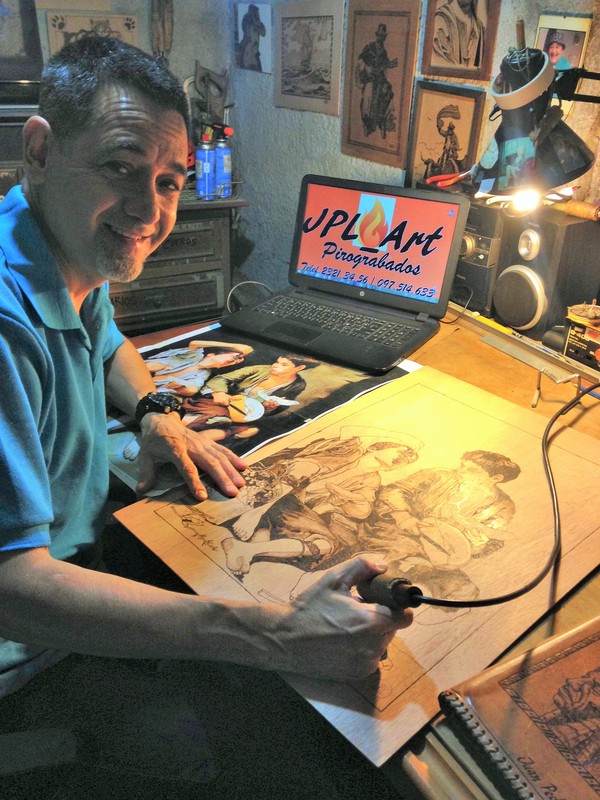
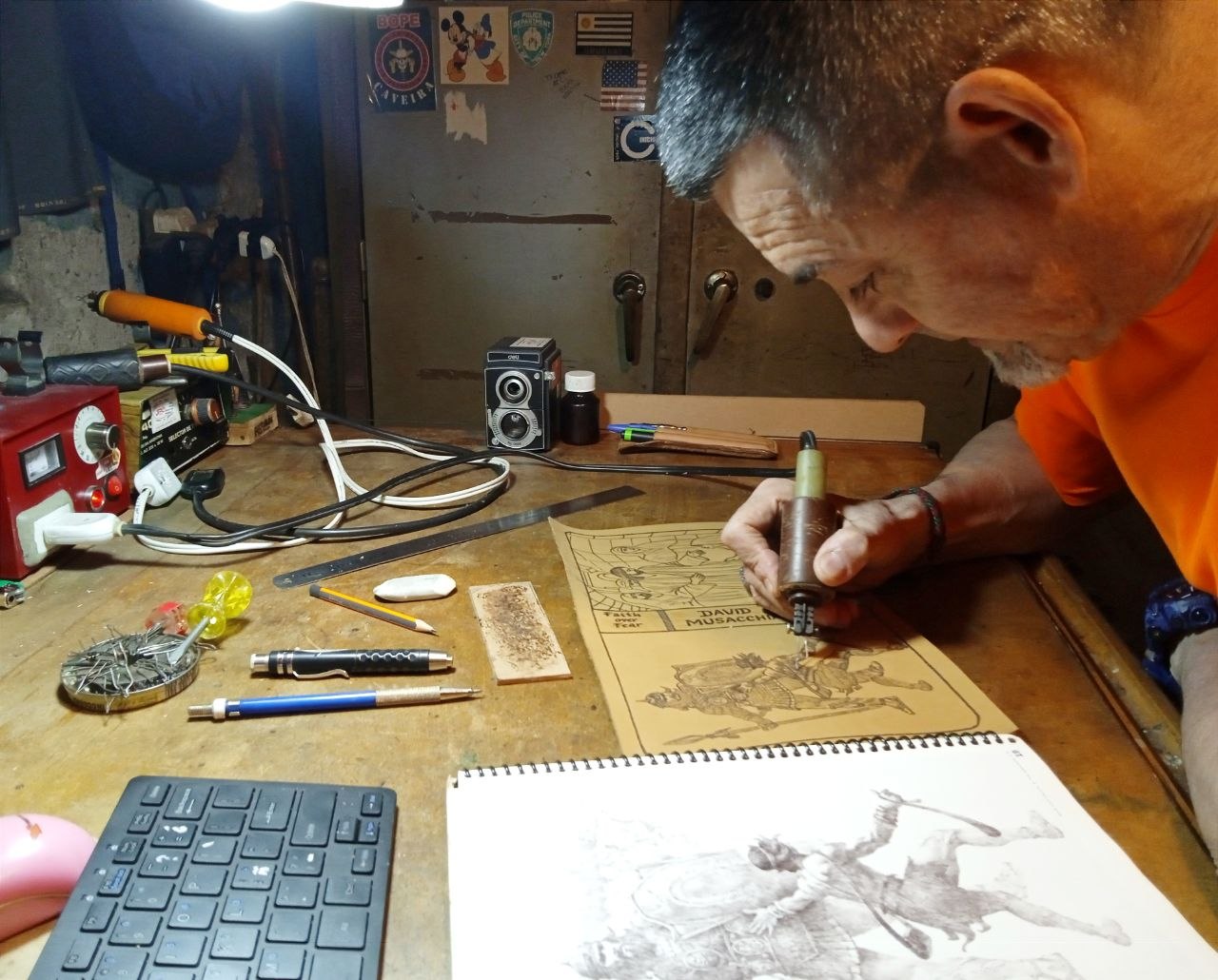
Juan Pedro López burns original images into cowhide at his workbench in Barrio Colón — covers, journals, scrolls, and one-of-a-kind leather pieces from Fire Drawn, finished by hand.
How it started
In 2003 a visitor from The Church of Jesus Christ of Latter-day Saints came to meet his family. Juan Pedro showed his comic drawings and India-ink illustrations. That brother encouraged him to put that draftsmanship onto leather covers — and to keep going. He taught himself: learning from mistakes, from choosing the right hide, and later from artists he found online. He began with an electronics soldering iron; today he works with a temperature-controlled pyrography pen, entirely freehand. No laser.
Long before that, in 1979, he studied comic art and dreamed of a life as a draftsman. Family hardship set that path aside. In 2003 the leather craft gave him the work back — and it became his livelihood. He still enjoys every stage: choosing hides, drawing, burning, assembling, and placing a finished piece in someone’s hands.
Why leather
Leather is versatile — book covers, bags, journals, scrolls, belts, and more. Fire Drawn is the name for what he does on every piece of hide: a craft with ancient roots, done one line at a time. The burn cannot be erased, so he pencils first, then builds light and shadow for depth, then assembles — zipper, hand-punched holes, brown thread, dubbin — before photos and delivery.
Sandra, his wife, and their son Martin sometimes help with the sewing.
How a piece is made
- Brief by email or WhatsApp — what you want, and references if you have them.
- Cut the leather from a mold.
- Pencil drawing on the hide (corrections still possible).
- Burn the line, then light and shadow.
- Assemble, finish, photograph.
- Ship.
Typical timing once materials are in the studio: about three days for a full scripture cover or small agenda; a larger leather wall piece can take up to about five days — always confirmed in the quote with the real queue.
Materials
He works cowhide prepared with natural tannins so it will accept the burn. Chrome-tanned leather will not. Stock is chosen for how it takes fire, often Brazilian hides prepared for burning — not every hide is Uruguayan. Hide color can run out; that is sometimes the only real delay.
What he loves to make
Scripture covers — especially when a client brings a new drawing he has not burned before — and leather pieces that become lasting family keepsakes, including temple scenes for many families. He declines work he cannot do well: tiny or soft family photos that will not read as faces on leather, and deadlines he cannot meet because of orders already in progress. Better to say no than to miss a date.
A story
A stake president in Arizona found his work from Uruguay and ordered thirty regular quad scripture bags with handles — shipped unassembled — plus simple artwork and step-by-step assembly instructions so youth could build their own. He paid in full immediately, across the distance. For Juan Pedro, that kind of trust is everything: do the work well, and the work sends the next client.
Outside the workshop
He loves bikepacking and multi-day rides with panniers (cicloturismo), good books by Uruguayan and foreign authors, and following road cycling — the Tour de France, the Giro. He has been a member of The Church of Jesus Christ of Latter-day Saints for 43 years, and enjoys life with his wife and three children. Montevideo’s Rambla — some 25 km along the Río de la Plata — is a place that inspires him.
“La calidad del trabajo es la mejor propaganda.”
The quality of the work is the best advertising.
Advice he would give a beginner: be patient with an apprentice’s mistakes. Getting it wrong is part of learning.
WhatsApp +598 97 514 633 · jplopez@firedrawn.com. Fire Drawn handles the quote, mockup, Stripe invoice, and FedEx to the United States. Juan Pedro makes the piece.